
Auldhouse, Laide, Achnasheen, Highland
IV22 2NP
Every report ends with a clear recommendation — Proceed, Proceed with caution, or High risk.
EPC Band G — the lowest possible rating. Solid stone walls, likely single-glazed timber sashes in places, and off-grid heating (oil, LPG or electric panels) will push annual energy costs into the £3,000–£5,000 range without major fabric upgrades.
Surrounded by crofting land, Gruinard Bay beach 5 minutes' walk, and Beinn Eighe / Inverpolly NNRs within an hour's drive. Dark-sky quality among the best in the UK.
Village has a community hall and shop within walking distance, but realistically a car is essential. Nearest supermarket 18 miles (Gairloch), Inverness 65 miles. Bus service is sparse and seasonal.
Scottish Water Wester Ross supply zone is not water-stressed; abundant rainfall (~1,800mm/yr). Confirm whether the property is on the public main or a private supply / borehole — common in this postcode.
Summary
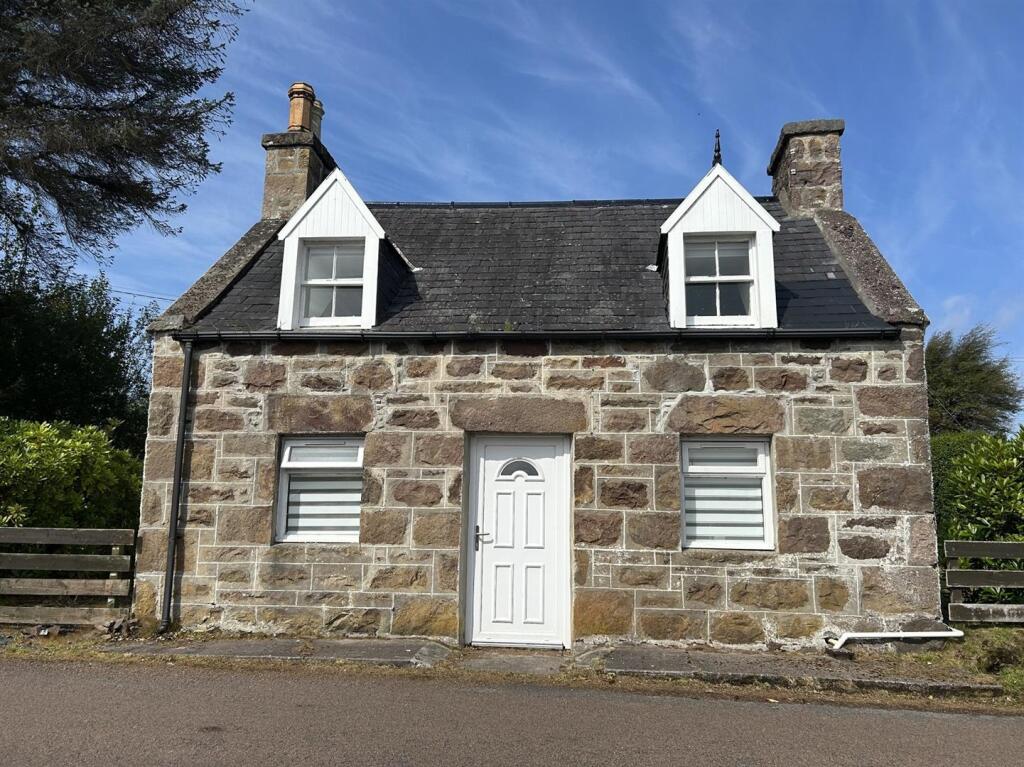
A traditional 4-bed detached freehold cottage (872 sq ft) in the crofting village of Laide on Gruinard Bay, NW Highlands. Listed £20k below Home Report value at £145,000 with declared EPC Band G. Clean air, abundant green space and very low flood exposure are offset by serious energy-efficiency, off-grid heating-cost and storm-exposure issues that will dominate running costs and the survey conversation.
Risk Assessment
Each vector is scored 0-100 (higher is healthier) and rated OPTIMAL, GOOD, CAUTION or POOR.
Remote Wester Ross location with no AQMA within 50km. NO2 and PM2.5 sit well under WHO guideline values year-round; only local wood/peat smoke from neighbouring crofts is a marginal indoor concern in winter.
SEPA flood maps show no fluvial or pluvial risk at the plot. Coastal surge zone for Gruinard Bay sits below the village line; the property is set back from the shore on rising ground.
Surrounded by crofting land, Gruinard Bay beach 5 minutes' walk, and Beinn Eighe / Inverpolly NNRs within an hour's drive. Dark-sky quality among the best in the UK.
Scottish Water Wester Ross supply zone is not water-stressed; abundant rainfall (~1,800mm/yr). Confirm whether the property is on the public main or a private supply / borehole — common in this postcode.
Latitude 57.8°N and Atlantic exposure keep summer max temps modest even on 2050 projections. CIBSE TM59 thresholds unlikely to be breached; the climate risk here is cold, wet and windy, not hot.
EPC Band G — the lowest possible rating. Solid stone walls, likely single-glazed timber sashes in places, and off-grid heating (oil, LPG or electric panels) will push annual energy costs into the £3,000–£5,000 range without major fabric upgrades.
Village has a community hall and shop within walking distance, but realistically a car is essential. Nearest supermarket 18 miles (Gairloch), Inverness 65 miles. Bus service is sparse and seasonal.
Climate Risk Forecast 2050
How key climate stressors at this postcode are projected to evolve by 2050 under the UKCP18 medium-emissions scenario (RCP 6.0).
Material Risk Assessment
Likely construction materials and condition risks inferred from listing photos, build era, EPC data and UK building stock patterns.
Pre-WWI Highland stone cottages of this size are almost always solid-wall with no cavity, on shallow foundations, with a mix of original and 1960s–80s extension fabric. Listing explicitly notes 'would benefit from some further upgrading and remedial works'. Expect: dated wiring (request EICR), aged heating system (oil tank if present needs Bund + age check), probable Artex/AIB in 1970s+ extension ceilings, and meaningful lead pipework probability on the rising main. Wester Ross prevailing south-westerlies drive wind-driven rain hard into harled walls — pointing, harling condition and rainwater goods are the top survey items. Council Tax noted as currently rated as a holiday let (non-domestic) — band will be re-set on completion; budget for a Band C–D equivalent.
Recommended Actions
- 01Get the full Home Report and EPC recommendations report — at Band G the EPC will list specific fabric and heating upgrades with indicative costs.
- 02Apply to Home Energy Scotland for a free retrofit assessment and check ECO4 / Warmer Homes Scotland eligibility before committing to any heating replacement.
- 03Specify a Level 3 building survey with explicit checks on roof slates, harling/pointing on the west elevation, chimney flashings, oil tank (if fitted) and any signs of rising/penetrating damp.
- 04Commission an EICR and a heating-system age/condition report — Band G properties commonly have 1970s–80s wiring and storage heaters at end-of-life.
- 05Budget £450–£900 for lead rising-main replacement by Scottish Water if not already upgraded; ask the seller for water-supply confirmation (mains vs private).🔒
- 06Price in a fabric-first retrofit envelope: internal wall insulation, loft top-up to 300mm, draught-proofing and secondary glazing on retained timber sashes — typical £15–25k spend to lift EPC into D/E and halve running costs.🔒
- 07Confirm with Highland Council the post-completion council tax band — current 'holiday let' non-domestic rating will not carry over to a residential owner-occupier.🔒
What to Ask Your Surveyor
Property-specific checks to hand to your RICS surveyor if you commission a Level 2 or Level 3 home survey.
- Q1Inspect the west-facing harling and stone pointing for wind-driven rain damage, spalling and open joints — flag any areas needing re-harling or lime repointing.
- Q2Assess roof slates, ridge, chimney flashings and underlay age; estimate remaining service life and cost of a like-for-like slate re-roof.
- Q3Confirm heating system type, age and condition (oil tank bund compliance, LPG or electric), and report on the age and safety of the consumer unit / wiring — request or commission an EICR.🔒
- Q4Check for rising and penetrating damp on all ground-floor solid walls, particularly the west and north elevations, using a calibrated meter and thermal imaging where possible.🔒
- Q5Identify likely asbestos-containing materials in the 1970s–80s extension (Artex, AIB ceilings, vinyl floor tiles) and advise on management or removal.🔒
- Q6Confirm the rising main material at entry — flag suspected lead pipework and quote replacement to the internal stop-tap.🔒
- Q7Comment on loft insulation depth, ventilation and any signs of condensation in the roof void; advise on top-up to 300mm without blocking eaves ventilation.🔒
Likely Maintenance Costs (3–5 years)
Indicative UK cost ranges for the highest-probability spends on this property over the next 3–5 years, based on inferred fabric, services, EPC and risk scores.